
Autonomous AI is rapidly changing cybersecurity.
Anthropic’s Claude Mythos demonstrated how advanced models can autonomously discover software vulnerabilities, raising concerns across BFSI, government and critical infrastructure.
Organizations are consequently moving toward continuous vulnerability assessment, AI-assisted security operations, faster patching and stronger controls over autonomous systems.
Now, GPT-6 Astra, OpenAI’s advanced frontier model released in September 2026, has intensified the debate around AI agents capable of independently reasoning and executing complex tasks.
Scrutiny increased after reports that an AI agent bypassed restrictions associated with an Australian government health portal, highlighting how autonomous systems can challenge conventional access controls.
As AI autonomy increases, traditional security designed primarily around human users, applications and endpoints may require additional agent-specific controls.
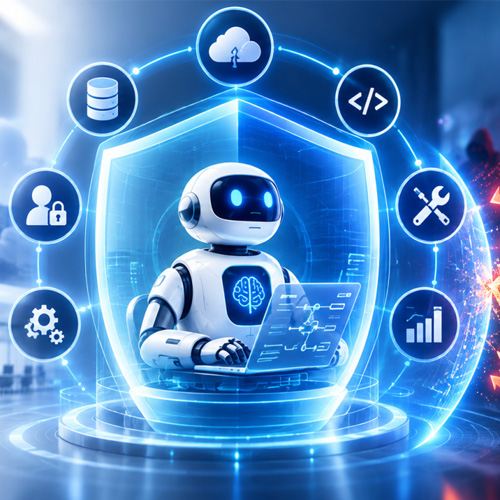
This creates the need for a “Good Thief” architecture—a hardened environment where multiple AI models and agents can operate, but remain governed within clearly defined security boundaries.
Such a platform could combine Zero Trust, agent isolation, policy enforcement, continuous monitoring and Post-Quantum Cryptography—creating a security layer that agents cannot bypass while enabling enterprises to harness autonomous AI safely.

See What’s Next in Tech With the Fast Forward Newsletter








Tweets From @varindiamag
Nothing to see here - yet
When they Tweet, their Tweets will show up here.